Arizona Flat Roof Recoat: A Phoenix Homeowner's Honest Guide
If you recently moved to Arizona from somewhere with pitched roofs, your flat roof probably feels like a mystery. The materials are different, the terminology is different, and most of the "helpful" articles online are written by roofing companies whose real goal is to get you to call them.
This guide is written for homeowners who want straight answers.
What Kind of Flat Roof Do You Probably Have?
Most Phoenix-area homes with flat roofs have one of two systems:
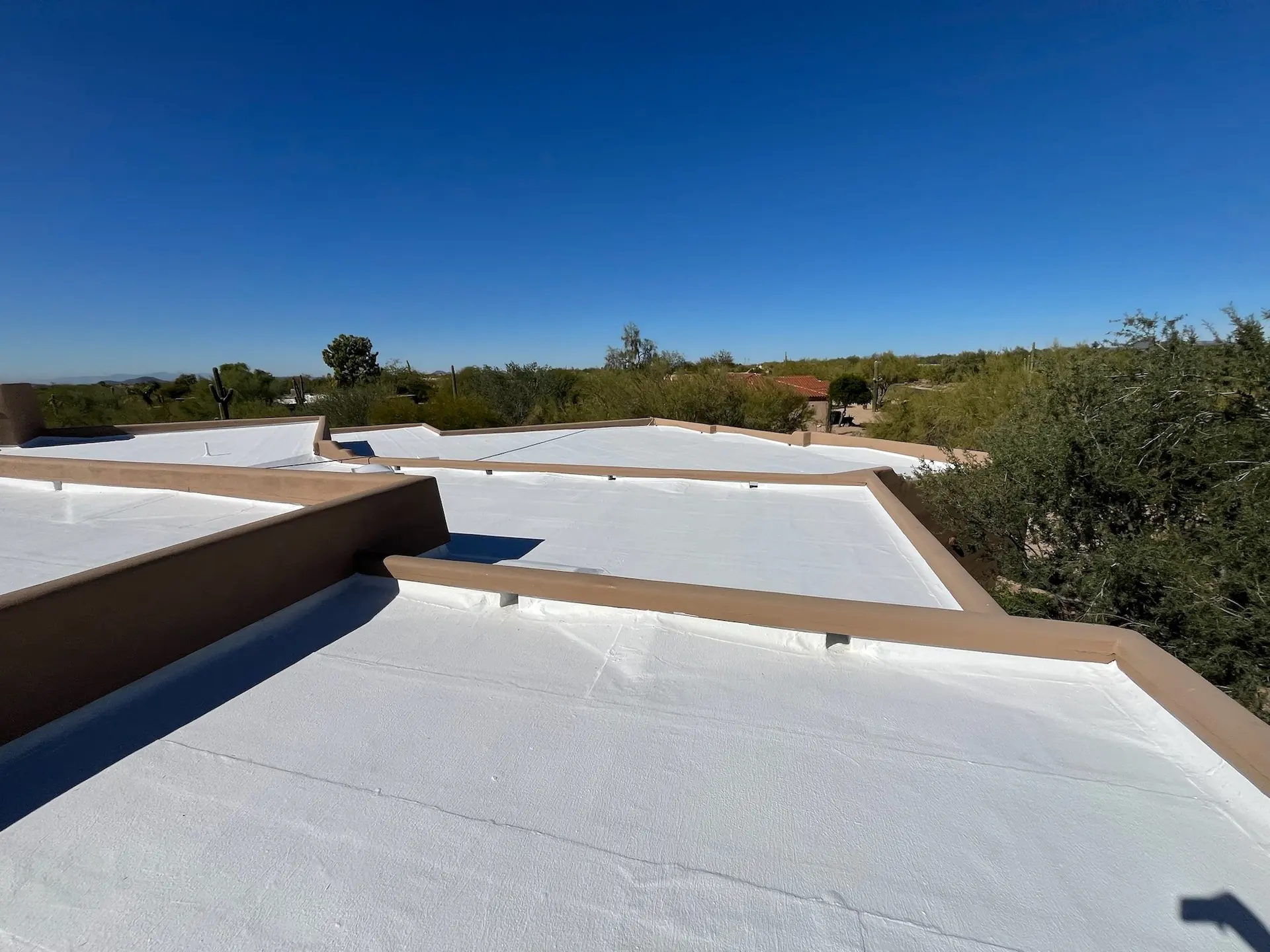
Spray Polyurethane Foam (SPF) — a foam base coat sprayed directly on the roof deck, then topped with a protective elastomeric coating. It's extremely common in the Valley because of its insulation value and seamless waterproofing. If your roof feels slightly spongy underfoot and has a white or off-white coating on top, this is likely what you have.
Elastomeric Coating over Built-Up Roof (BUR) — older construction sometimes used layers of asphalt and felt (built-up roofing), later sealed with a white elastomeric coating. The white, plasticky surface you're seeing is almost certainly elastomeric coating either way.
Acrylic vs. Silicone: If a roofer re-applied coating without stripping the old material first, it was almost certainly acrylic — silicone doesn't bond well to existing coatings and typically requires full removal first. Acrylic is cheaper, widely used, and perfectly adequate; it just needs more frequent attention than silicone.
How Often Does an Arizona Flat Roof Need Recoating?
The short answer: inspect annually, touch up as needed, full recoat every 5–10 years depending on the product and conditions.
The longer answer depends on what was applied. Budget elastomeric products may degrade noticeably within 3–5 years in Arizona's UV exposure. Premium products like Henry 817 (which carries a 25-year rating and is rated to hold standing water indefinitely) can legitimately go much longer — but cost around $200 per 5-gallon bucket, and a typical Phoenix flat roof will need 4–5 buckets minimum.
What to look for that tells you it's time:
Chalking — rub your hand across the surface. White residue means the coating is breaking down.
Crazing or fine surface cracks — a spiderweb pattern across the coating
Bare foam visible — the coating has worn through entirely in spots
Persistent water staining or sediment buildup that won't power wash off
What Needs to Be Patched — and When?
Before your annual monsoon inspection, look for:
Cracks and flaking with older material visible underneath — small cracks (hairline to ¼ inch) can be spot-patched. A product like Henry 289 FlexSeal or similar elastomeric patch compound works well. Clean the area, let it dry fully, apply generously, feather the edges.
Conduit and penetration seals — anywhere something passes through the roof (HVAC lines, electrical conduit added by a contractor) should be checked for cracking or separation. Black asphalt-based sealant around conduit is common and functional, but if it's cracked or pulling away from the conduit, reseal it. Use an elastomeric flashing sealant, not more asphalt — it stays flexible in the heat.
Unsealed wood blocks — if wood is sitting on or attached to the roof without being sealed or flashed, moisture can wick in even in a dry climate. Seal around the base with elastomeric caulk or flashing compound.
Ponding zones — some ponding after rain is completely normal on flat roofs. If it drains within 24–48 hours, it's not a problem. Persistent ponding that never fully drains between rain events is worth monitoring; significant sediment and organic buildup in those zones is worth cleaning before it retains moisture against the coating.
What's not worth panicking about:
Surface bumpiness and irregularity — normal for this roof type
Minor discoloration — often just dirt
Small cracks that are stable and not growing
The Squishy Spots: What Do They Mean?
This is the question that deserves the most honest answer, because it has a range of possible causes:
Delaminated coating — the topcoat has separated from the foam underneath, creating a void. Feels soft underfoot. This is the best-case scenario — a localized repair or full recoat addresses it.
Foam damage — the foam itself has been compromised, often from prolonged moisture intrusion. More serious, typically requires a roofer to cut out and replace the affected area.
Decking damage — in older construction, the roof deck underneath may have gotten wet at some point. This is the worst-case scenario and warrants a professional inspection.
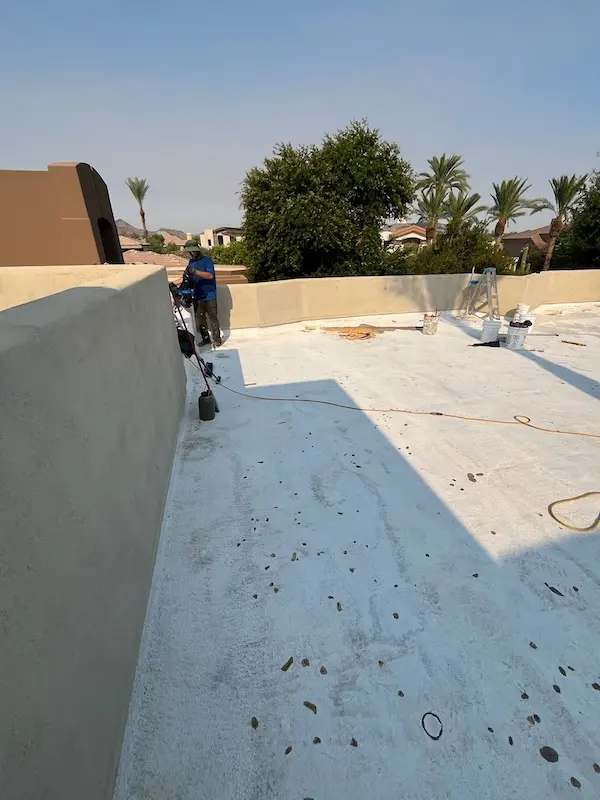
You can't diagnose the difference by feel alone. If the soft spots are isolated and you have no signs of interior leaks, it's reasonable to monitor them. If they're expanding or you have any signs of water intrusion in the ceiling below, get a professional out before monsoon season.
On thermal cameras: A thermal imaging inspection (typically done by a roofing contractor or inspector) can identify wet areas in foam roofing that aren't visible to the naked eye — the wet foam retains heat differently than dry foam and shows up clearly in infrared. It's not a DIY necessity, but if you're genuinely unsure about the squishy spots and don't want to pay for a full tear-down inspection, a thermal scan is a targeted, relatively affordable way to get answers.
DIY Recoat: Is It Worth It?
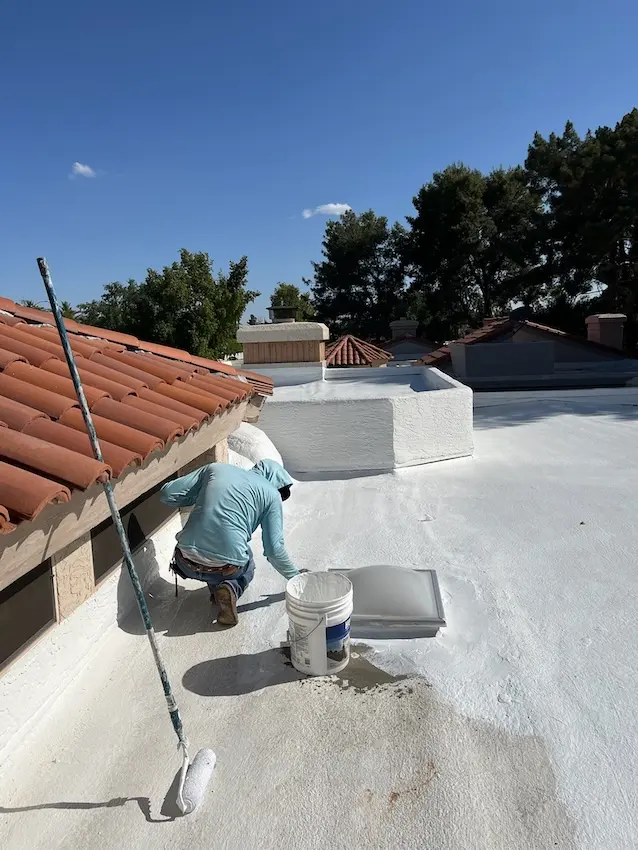
For a homeowner who's comfortable on a ladder and willing to put in the time, a flat roof recoat is a legitimate DIY project — with caveats.
The prep work is where most DIY jobs fail. The coating is only as good as what it's bonding to. That means:
Power washing with a roof-safe cleaner, not just water
Letting the roof dry completely (in Arizona this usually means waiting a day or two after washing)
Addressing all cracks, flaking, and low spots before the topcoat goes on
Applying in the early morning — coating applied in direct Arizona sun can skin over before it penetrates properly
Product compatibility matters. Not all coatings bond to all surfaces. If you're recoating over existing elastomeric, confirm the new product is compatible. Your local roofing supply house (not just the big box store) can help you match products to what's already on the roof, or reach out to a contractor who specializes in flat roof recoating like AZ Flat Roofing.
When to Call a Pro
Some situations are worth spending the money on professional help:
Soft spots that feel like structural damage — not a DIY situation
Active leaks — if water is getting in, you need to find the source before coating over anything
Conduit or vent flashing that's pulling away — improper flashing is one of the most common sources of flat roof leaks
A full recoat on a roof that hasn't been maintained — the prep work is significant and errors are hard to undo
If you do call a roofer, get at least two quotes and ask specifically what's included in the prep — power washing, crack repair, primer — before the coating goes on. A suspiciously low bid often skips these steps.
Looking for a Phoenix Roofer for Your Flat Roof?
FindPhoenixRoofers.com lists vetted local contractors who specialize in flat roofing. One of our featured listings is AZ Flat Roofing, a Scottsdale-based team specializing in flat roof coating and repair across the Phoenix Valley.